Kenya Travel Guide
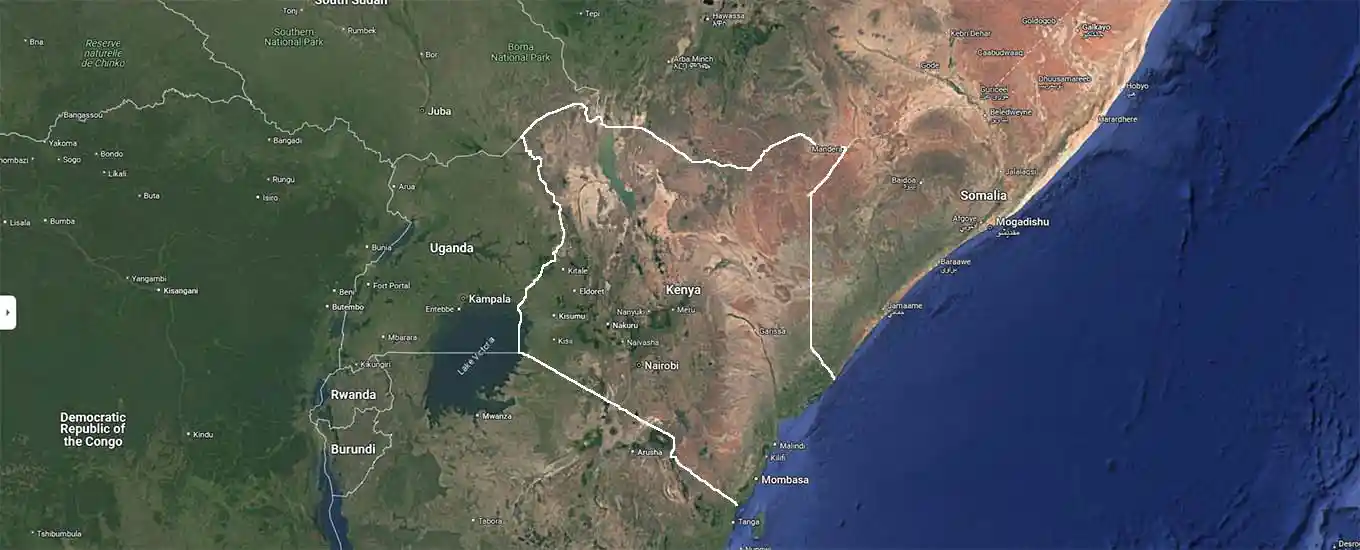
Located on the equator in East Africa, Kenya stretches from the Indian Ocean in the southeast to Lake Victoria in the west. It shares borders with Ethiopia, Somalia, South Sudan, Uganda, and Tanzania, and its 536-kilometre (333-mile) coastline has long been a hub for trade and cultural exchange. Known for wildlife safaris, scenic landscapes, and growing urban centers, the country offers visitors a mix of adventure, culture, and business opportunities. This Kenya travel guide explores its history, major cities, physical features, climate, and ethnic groups.
History of Kenya
Kenya gained independence from Britain in 1963 and became a republic on December 12, 1964. Before this, it was a British protectorate from 1895 and a colony from 1920. Colonial rule left a lasting impact on political, social, and economic structures, while resistance movements like the Mau Mau uprising in the 1950s played a pivotal role in ending foreign control.
After independence, governance was initially centralized. However, the 2010 Constitution introduced a devolved system, dividing the country into 47 counties. This reform aimed to bring services closer to communities, promote equitable development, and address historical inequalities.
Major Cities
Nairobi, the capital, is the largest city and the hub of administration, finance, and culture. Its unique blend of urban life and wildlife is exemplified by Nairobi National Park, where giraffes and lions roam against a backdrop of skyscrapers.
Mombasa, on the Indian Ocean coast, is the second-largest city and the main port. Its history reflects centuries of Arab, Portuguese, and British influence, and today it is a gateway for trade and a popular beach destination.
Kisumu, on Lake Victoria’s shores, is a vital commercial and transport center for western Kenya. Nakuru, located in the Rift Valley, has grown rapidly and sits near agricultural lands and Lake Nakuru National Park, famous for flamingos and wildlife. Each city contributes uniquely to Kenya’s economy, culture, and identity.
Physical Features
The physical features of Kenya are remarkably diverse. The Great Rift Valley cuts through the country, creating escarpments, plateaus, and lakes such as Turkana, Naivasha, and the Kenyan portion of Lake Victoria.
Mount Kenya, standing at 5,199 meters (17,057 feet), dominates the central highlands and is Africa’s second-highest peak. Its slopes host forests, rivers, and alpine meadows within Mount Kenya National Park. The Aberdare Range to the east features dense forests and a variety of wildlife.
Fertile central highlands support tea, coffee, and horticulture, while the northern and eastern regions are largely arid and home to pastoralist communities. Coastal plains along the Indian Ocean feature white sandy beaches, coral reefs, and mangrove forests. Inland areas include savannas, swamps, deserts, and scattered hills, supporting diverse ecosystems and wildlife.
Area Comparison
About 5/7 the size of New South Wales (Australia)
Slightly smaller than Saskatchewan (Canada)
Roughly 2.5 times larger than the United Kingdom
About twice the size of Arizona (USA)
Slightly less than twice the size of Italy (EU)
Climate
The climate of Kenya varies widely, influenced by altitude and proximity to the ocean. Seasons are defined more by rainfall than temperature. From December to March, northeast winds dominate northern areas, while south to southeast winds prevail in the south. These months are generally dry, with occasional showers.
Long rains occur from late March to May, influenced by easterly winds across the region. June to August is cooler and drier, followed by short rains in October and November.
Regional Climate Variations
Lake Victoria Basin: Rainfall ranges from 1,000 mm along the lakeshore to 1,800 mm in higher areas. Agriculture thrives here, and temperatures range from 27 °C in July to 32 °C in February.
Rift Valley: Highlands are fertile, receiving over 760 mm of rain, while the valley floor is drier. Average temperatures drop from 29 °C in the north to 16 °C near Lakes Nakuru and Naivasha.
Eastern Plateau: Semi-arid with 500–760 mm of annual rainfall. Farming is possible but often affected by unpredictable precipitation.
Arid Regions: Northern, northeastern, and southern areas are hot and dry, with temperatures above 29 °C and low rainfall.
Coastal Region: Hot and humid, with 760–1,270 mm of rainfall. The southern coast benefits from more reliable precipitation, supporting tropical crops and lush vegetation.
Ethnic Groups
The population is predominantly African, divided into three main language groups: Bantu, Nilo-Saharan, and Afro-Asiatic.
Bantu communities, including the Kikuyu, Luhya, Kamba, Meru, and Kisii, occupy fertile central and western regions and primarily practice farming.
Nilo-Saharan groups, such as the Luo, Kalenjin, Maasai, Samburu, and Turkana, live in the western plateau, Rift Valley, and arid northern plains. Many maintain pastoralist traditions alongside farming.
Afro-Asiatic groups, including Somali and Oromo communities, are concentrated in the north and northeast, relying mostly on pastoralism in regions prone to drought. The Burji, descendants of Ethiopian migrants in the 1930s, also belong to this group.
Along the coast, the Swahili culture emerged from centuries of interaction between Africans and Arab traders, spreading Islam and shaping coastal traditions. Swahili and English serve as official languages, facilitating trade, governance, and education.
Other communities include South Asians, particularly of Indian descent, and Europeans, mainly of British heritage, who contribute to commerce, agriculture, and urban life. This rich cultural diversity reflects both history and the modern dynamism of the region.
DETAILS ABOUT KENYA
| Head of state and Government | William Ruto |
| Capital | Nairobi |
| Population | 52,428,290 (2024 Est) |
| Form of Government | Unitary presidential republic |
| Official languages | Swahili, English |
| Official religion | None |
| Total Area (Sq km) | 580,367 |
| Total Area (Sq. Mi) | 224,081 |
| Monetary unit | Kenyan shilling (KES) |
| Population rank | 28 (2024 Est) |
| Population projection 2030 | 63,860,000 |
| Density | Persons per sq. km (2024)82 |
| Density | Persons per sq. mi (2024)212.4 |
| Urban-Rural population | Urban 29.52% (2023) Rural 70.48% (2023) |
| Life expectancy at birth | Male: (2022) 59.6 years, Female: (2022) 64.7 years |
| Literacy: Percentage of population Age 15 and over literate | 82.88% (2022) |
| Gni Per Capita (US $) | 2110 USD (2023-2024) |
FUN FACTS
The first African woman to ever win a Nobel Prize was from Kenya. Her name was Wangari Muta Maathai.
Lake Turkana, located in northern Kenya, is the world’s largest permanent desert lake. (They found a huge freshwater reservoir underneath the lake)
Kenyan marathon runners dominate long-distance races around the world. And they all come from the same area; the Rift Valley region! The country is the largest rose producer in the world and is often referred to as the ‘’Flower Garden of Europe’’. Also, every year, millions of Kenyan roses are turned into oil to create luxury perfumes such as Yves Saint Laurent’s Paris.
MUST SEE:
Maasai Mara National Reserve
Amboseli National Park
Lake Nakuru National Park
Mount Kenya
Lamu Old Town
Diani Beach
Hell’s Gate National Park
Nairobi National Park