Kilimanjaro Travel Guide
Origin and Meaning of Kilimanjaro
Kilimanjaro, Africa’s tallest mountain, takes its name from Kilemakyaro, a Chagga word meaning “hard to conquer.” Foreign climbers struggled to pronounce it, and over time it became Kilimanjaro.
Rising 5,895 meters above sea level, it holds two records: Africa’s highest peak and the world’s tallest free-standing mountain. Its snowcapped summit lies just 290 km from the tropical Indian Ocean coast, creating a unique landscape where glaciers crown the equator. The mountain formed nearly one million years ago after a series of volcanic eruptions, and although dormant, volcanic activity was last noted in the 1940s.
Landscape and Wildlife
At the base, Kilimanjaro stretches across 40 miles, its slopes covered by lush rainforests that feed the fertile farmland below. Here, the Chagga people cultivate coffee, bananas, and maize in the rich volcanic soils.
Wildlife thrives in these forests, making Mount Kilimanjaro National Park a UNESCO World Heritage Site. Elephants, leopards, lions, and black-and-white colobus monkeys are some of the iconic species found around the mountain.
Hiking and Climbing Routes
Watching Kilimanjaro from below is breathtaking, but trekking to its summit is the ultimate adventure. The most popular of the Kilimanjaro trekking routes is the Marangu Route, also called the “Coca-Cola Route.” It takes climbers through tropical rainforest, moorland, alpine desert, and finally to the icy peaks of Kibo, Mawenzi, and Uhuru, the highest point in Africa.
The full trek covers about 18 miles. Climbers usually take four to six days, with five to six days recommended for proper acclimatization. While fit trekkers can attempt it in four days, adding an extra day improves both safety and the overall Kilimanjaro climbing experience.
Cultural and Historical Significance
For generations, the local Chagga community has climbed the mountain to collect medicinal plants and perform rituals tied to their traditions. In 1889, the first Europeans reached the summit with the support of native guides and porters. Their achievement marked the beginning of Kilimanjaro as a global trekking destination.
Today, Chagga guides and porters remain an essential part of every expedition, sharing their deep knowledge of the mountain while supporting climbers from around the world.
Challenges and Achievements
Climbing Kilimanjaro is both rewarding and demanding. Altitude sickness is a common challenge, but with proper preparation and gradual ascent, trekkers can successfully reach Uhuru Peak. Stories of climbers include an 11-year-old who reached the summit in 1976 and an 88-year-old who did the same in 1988, proving that determination matters as much as physical strength.
After summiting, climbers often celebrate with grilled bananas, local Tanzanian beer, and a treasured certificate marking their achievement.
Best Time to Climb
The best time to climb Kilimanjaro is during the dry months of January, February, July, August, November, and December. Clear skies and stable conditions make these months ideal for trekking. April and May are considered the most challenging periods due to heavy rains, snow, and cloud cover, which reduce visibility and make trails slippery.
Travel Packages
Many operators offer Kilimanjaro trekking packages that combine the mountain climb with safaris in Tanzania’s famous parks such as the Serengeti or Ngorongoro Crater. Others include Zanzibar beach holidays, allowing travelers to pair the adventure of a lifetime with relaxation on white sandy beaches.
Views of Kilimanjaro
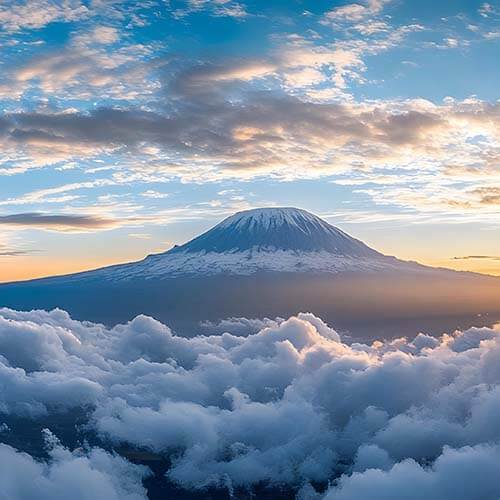
Amazing views of Mount Kilimanjaro
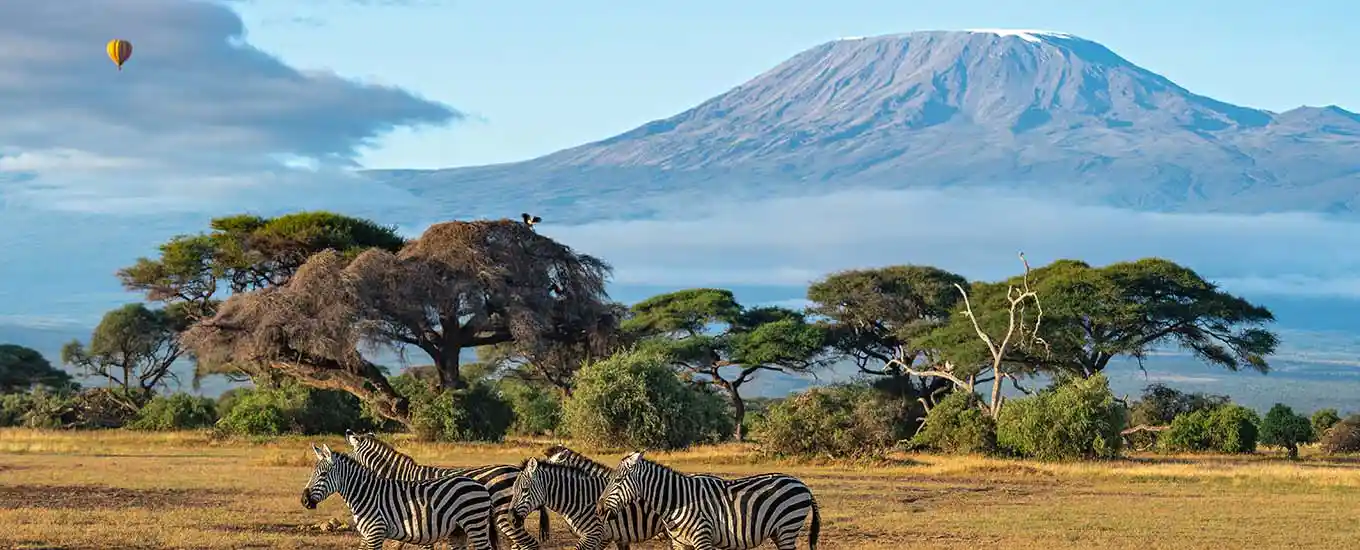
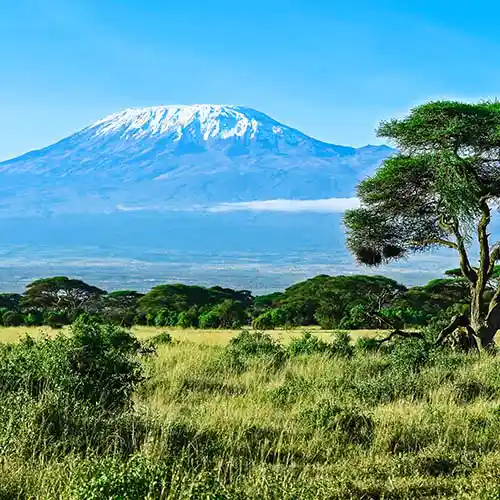
With Mount Kilimanjaro there are amazing views of Mount Kilimanjaro from all around the Mountain, such as from Amboseli in Kenya, from in between Mount Meru and Mount Kilimanjaro, and many other places. When you get on Mount Kilimanjaro you will have equal amazing views of both the mountain, but also of the whole surrounding area.
Trek And Climb Mount Kilimanjaro
The most iconic activity in Kilimanjaro National Park is undoubtedly climbing it
This challenging yet rewarding adventure offers various routes from 5 to 9 days, each with unique views and difficulties. The most popular being Marangu, Machame and Lemosho routes which provide breathtaking scenery and the chance to reach the summit, Uhuru Peak, Africa’s highest point.
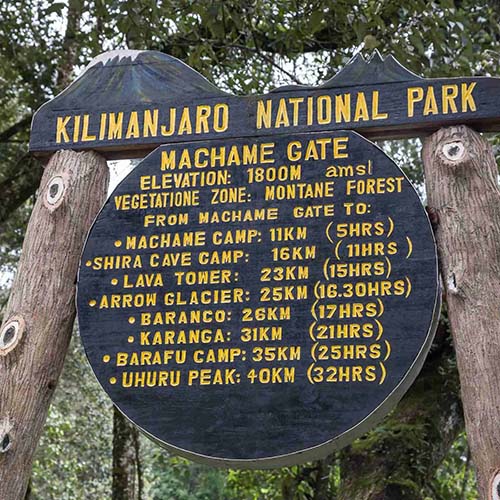
Machame route Signage
A popular route on Kilimanjaro
Mount Kilimanjaro has different routes for climbers with varying preferences and skill levels. Each of the Kilimanjaro Climbing Routes offers a distinct experience ranging from a relaxed pace to a challenging adventure, and from comfortable amenities to basic camping.
As one of the Best Kilimanjaro Climbing Operators, Bondei East African Safari Tours focuses on what we believe is some of the best routes.
Hiking on Kilimanjaro
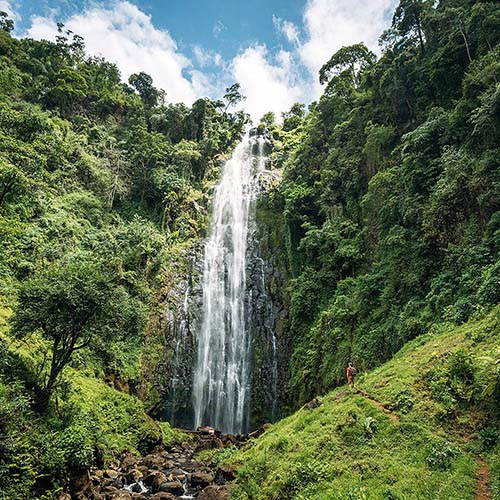
Hiking on Kilimanjaro offers a great alternative to climbing the summit
The park’s trails wind through lush Rainforest zone, to the lower part of the moorland zone offering magnificent views of the mountain’s lower reaches.
The trails we use require a moderate level of fitness and can be completed in 1 to 3 days. They are a great addition to our Kilimanjaro climbing Packages to enjoy the natural beauty of the mountains without the intensity of a full climb.